If you are drawn to neighborhoods that feel lived-in rather than master-planned, Penrose is worth a closer look. In this part of South Arlington, architecture and daily life are tightly connected, from front-porch homes and mature trees to parks, buses, and the steady energy of Columbia Pike. Whether you are thinking about buying or preparing to sell, understanding how Penrose functions day to day can help you see what makes it distinct. Let’s dive in.
Penrose at a glance
Penrose is a compact neighborhood in central Arlington County, about three miles from Washington, D.C. The Penrose Historic District was listed on the Virginia Landmarks Register in 2003 and the National Register of Historic Places in 2004, with boundaries roughly defined by Arlington Boulevard, Columbia Pike, South Wise Street and South Courthouse Road, and South Fillmore Street and South Barton Street.
That location places Penrose directly in the Columbia Pike corridor and near Fort Myer. For you as a buyer or seller, that matters because the neighborhood is not isolated. It sits within a broader South Arlington setting shaped by local commerce, bus-based transit, and established residential streets.
Penrose history shapes its identity
Penrose did not grow from a single moment or a single development style. It began as the Butler-Holmes subdivision in 1882, created by William H. Butler and Henry Louis Holmes, two leaders in Arlington’s African American community.
Its history is tied to Freedman’s Village and to the later movement of Black families into nearby communities that did not have the same restrictive covenants as surrounding neighborhoods. The Virginia Department of Historic Resources describes Penrose today as a firmly established multicultural and multiethnic neighborhood, with lasting historic, economic, and cultural ties to African American families.
That background gives Penrose a sense of depth you can often feel in the built environment. The neighborhood association also notes that Penrose developed as transportation expanded, and that the name Penrose was adopted in 1995 from a historic trolley stop on the old Georgetown-Nauck line.
Penrose architecture is layered
One of the most interesting things about Penrose is that it does not read as one architectural era. Instead, it reflects several generations of building, which creates a streetscape that feels varied and established rather than uniform.
The historic district includes mostly single-family homes, but it also includes multiple dwellings, a church, commercial development along Columbia Pike, and two landscaped parks. Homes are typically set back from the road behind wide sidewalks, and many properties include driveways and freestanding garages.
The standard lot is about 50 by 100 feet, and the street pattern is irregular rather than rigid. Add in mature shade trees and decorative lighting, and the result is a neighborhood that feels human-scaled and visually textured.
Early homes and porch-forward design
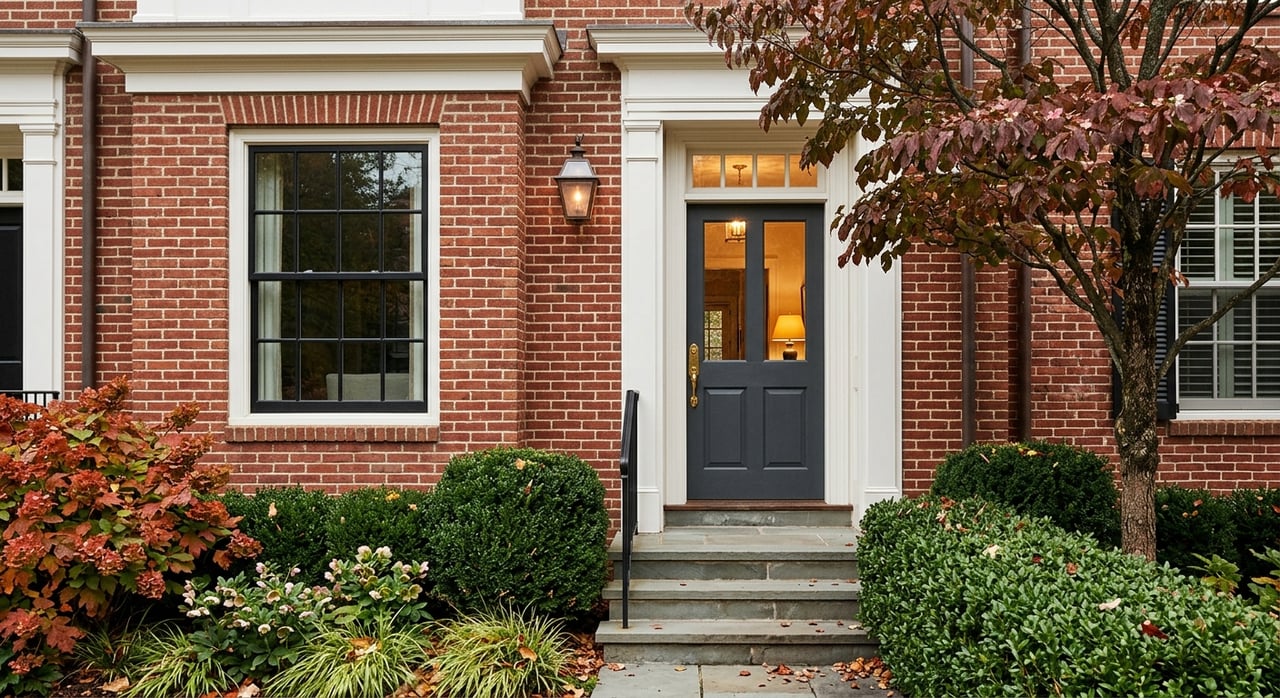
Penrose includes late-19th- and early-20th-century vernacular, Queen Anne, Italianate, and Colonial Revival homes. Many early examples feature full-width front porches, turned-post supports, weatherboard siding, and simple sash windows.
For everyday living, that often translates into homes with a more porch-centered presence and a stronger relationship to the street. From a design perspective, these details help create the kind of curb appeal that feels charming without being overly formal.
Bungalows, revivals, and practical variety
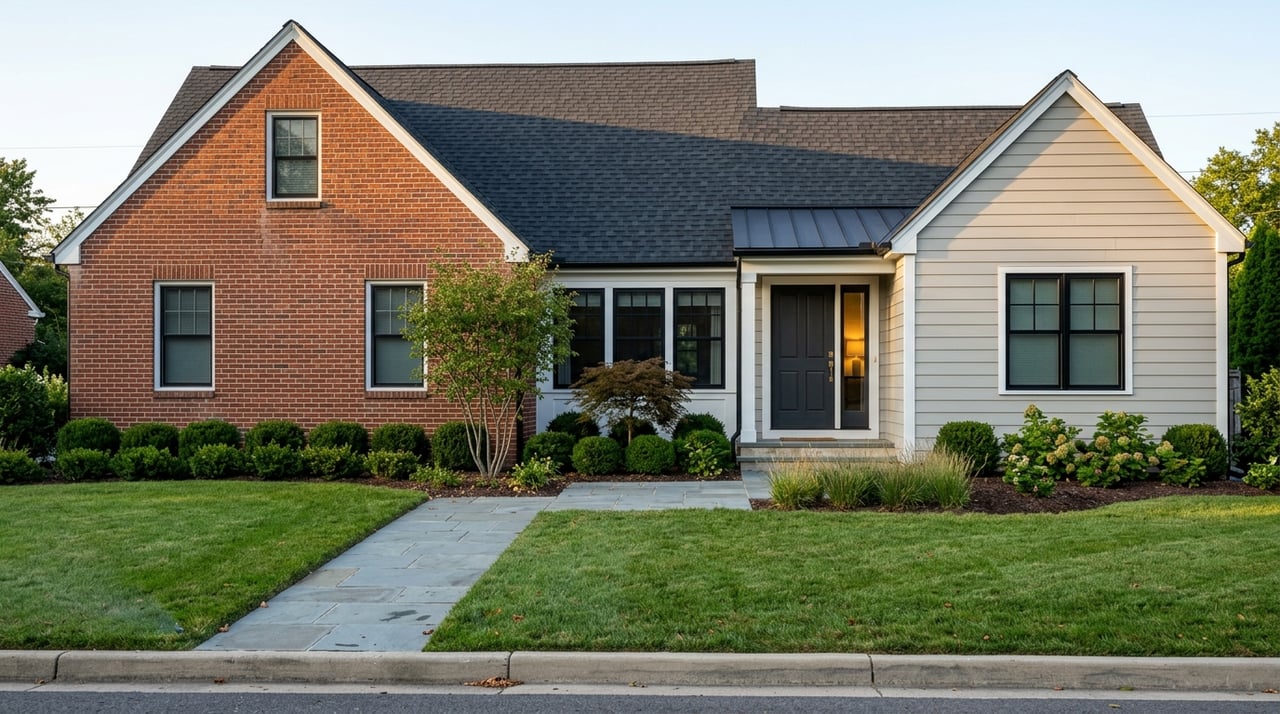
The neighborhood also includes Bungalow and Craftsman homes, Dutch Colonial Revival, Tudor Revival, Moderne, Cape Cod, and American Foursquare forms. Some houses were kit or mail-order homes, which adds another layer to Penrose’s architectural story.
That variety is part of the neighborhood’s appeal. If you are house hunting here, you are less likely to find one repeated formula and more likely to see a mix of rooflines, facades, porches, and materials from one block to the next.
Mid-century and later infill
Penrose continued to evolve through the 1940s, when brick Colonial Revival buildings were added on remaining unimproved lots. Wartime and postwar housing demand also brought garden-style apartment communities such as Fillmore Gardens and Fort Craig Apartments near the Columbia Pike edge.
The 2004 historic nomination notes that about 85 primary resources were built after 1954, mostly as infill on previously unimproved lots. Importantly, that newer construction generally remained consistent with the neighborhood’s overall scale and materials.
What everyday living feels like
Penrose offers a blend of residential calm and corridor convenience. The housing stock, lot sizes, sidewalks, and parks support neighborhood life, while Columbia Pike brings in shops, restaurants, and transit access.
For many buyers, that balance is the real draw. You get architectural character and local texture without losing daily convenience.
Columbia Pike is the daily backbone
Arlington County describes Columbia Pike as one of Arlington’s oldest thoroughfares and calls it Arlington’s Main Street. The corridor combines housing, local shops, and culturally diverse restaurants, and its role as a neighborhood-serving commercial area goes back at least to the mid-1920s.
Historically, the Columbia Pike and Walter Reed Drive area already had groceries, cafes, drugstores, and other retail that supported daily life. Today, County planning continues that same main-street approach, with an emphasis on mixed-use development, ground-floor retail, sidewalk cafes, plazas, street trees, pedestrian-scale buildings, and transitions to surrounding residential blocks.
Parks add practical outdoor space
Penrose’s green spaces are not oversized, but they are useful and woven into everyday routines. That can be a meaningful quality if you value nearby places to gather, play, or spend time outside without leaving the neighborhood.
Penrose Park is a two-acre park with picnic tables, a picnic shelter, charcoal grills, a basketball court, and playgrounds. Butler Holmes Park is also two acres and includes an open grassy area, an accessible playground, an accessible grill and picnic shelter, and a basketball court.
Towers Park expands the recreation mix with four acres that include tennis courts, a basketball court, a sand volleyball court, a community garden, a lighted dog park, picnic amenities, and a connection to the Washington Blvd. Trail. Penrose Square adds a more urban public space with a tree terrace, movable seating, an interactive water feature, and public art inspired by the former Three Sisters radio towers.
Commuting in Penrose
Transportation has shaped Penrose from the beginning. The neighborhood association notes that the Fort Meyer Branch of the Washington-Alexandria and Falls Church commuter railway connected Penrose to Rosslyn, Georgetown, and Washington, D.C., helping the area grow as a working-class commuting suburb.
Today, the commute story is less about rail and more about corridor access. Arlington County says Columbia Pike is one of the region’s most heavily traveled corridors and is primarily served by buses.
The County’s transit-station project is adding 23 stations as part of a premium transit network linking Columbia Pike, Pentagon City, and Crystal City. Arlington County also reports that the Columbia Pike Multimodal Street Improvements project was substantially complete in December 2025, with sidewalks and vehicle lanes open.
For you, that means Penrose fits best if you appreciate a walkable, bus-oriented neighborhood pattern. It is a part of Arlington where streets, transit, and retail work together in a way that feels more urban than outer-suburban.
What buyers should notice in Penrose
If you are considering a home in Penrose, it helps to look beyond square footage alone. The neighborhood’s appeal often comes from how homes sit on their lots, how blocks connect to parks and Columbia Pike, and how architectural details shape the feel of each street.
A few things to pay attention to include:
- Front porches and how they contribute to curb appeal and outdoor living
- Mature trees, setbacks, and wide sidewalks that shape the streetscape
- Differences between early homes, 1940s brick properties, and later infill
- Proximity to Columbia Pike for errands, dining, and transit access
- Access to nearby parks and public spaces for everyday recreation
Because Penrose developed over time, homes may feel more compact and more segmented than newer open-plan suburban construction. That layered character is often part of the draw, especially for buyers who value design details and a neighborhood with visible history.
What sellers can highlight
If you are selling in Penrose, the strongest story is often not just the house itself. It is the combination of architectural character, practical livability, and location within the Columbia Pike corridor.
That means thoughtful presentation matters. Buyers are often responding to the full picture, including porches, landscaping, the relationship of the home to the street, and the sense of place created by sidewalks, trees, and nearby amenities.
Features worth emphasizing may include:
- Architectural details such as porches, siding, brickwork, and window patterns
- Established lot characteristics like setbacks, mature trees, and detached garages
- Access to Penrose Park, Butler Holmes Park, Towers Park, and Penrose Square
- Convenience to Columbia Pike’s shops, restaurants, and bus service
- The neighborhood’s documented historic character and layered architectural mix
In a neighborhood like Penrose, design-forward marketing can help buyers understand not just what a home is, but how it lives. That is especially important when the value is tied to character, setting, and daily convenience rather than one headline feature.
Why Penrose stands out in South Arlington
Penrose offers a balance that can be hard to find. It has a documented historic identity, an unusually varied housing stock, modest but useful parks, and everyday access to one of Arlington’s most established commercial corridors.
In practical terms, that creates a neighborhood experience built around texture and connection. You see it in the porch-forward homes, the irregular street pattern, the mature trees, and the way Columbia Pike anchors errands, dining, and transit.
For buyers, that can mean finding a home with personality in a location that supports daily life. For sellers, it means being able to position Penrose as more than a pin on the map. It is a neighborhood with history, design interest, and a clear day-to-day rhythm.
If you are exploring Penrose or planning your next move in Arlington, working with a local advisor who understands both architecture and neighborhood positioning can make the process clearer. To talk through your goals, market timing, or how to present a home in this part of South Arlington, connect with Caitlin Platt.
FAQs
What is the architectural style of homes in Penrose, Arlington?
- Penrose includes a wide mix of styles, including vernacular, Queen Anne, Italianate, Colonial Revival, Bungalow and Craftsman, Dutch Colonial Revival, Tudor Revival, Moderne, Cape Cod, and American Foursquare homes.
What makes everyday living in Penrose, South Arlington convenient?
- Everyday living in Penrose is shaped by access to Columbia Pike, where local shops, restaurants, and bus service are part of the neighborhood’s daily rhythm, along with nearby parks and walkable residential streets.
Is Penrose a historic neighborhood in Arlington, VA?
- Yes. The Penrose Historic District was listed on the Virginia Landmarks Register in 2003 and the National Register of Historic Places in 2004.
What parks are near homes in Penrose, Arlington?
- Penrose Park, Butler Holmes Park, Towers Park, and Penrose Square all serve the area, offering amenities such as playgrounds, courts, picnic spaces, a dog park, a community garden, and urban seating areas.
How do people commute from Penrose in South Arlington?
- Arlington County describes Columbia Pike as a heavily traveled corridor that is primarily served by buses, and current transit improvements are focused on a premium bus-oriented network connecting Columbia Pike with Pentagon City and Crystal City.